Jojoba Bush
(Simmondleii Californica)click the photo to continue
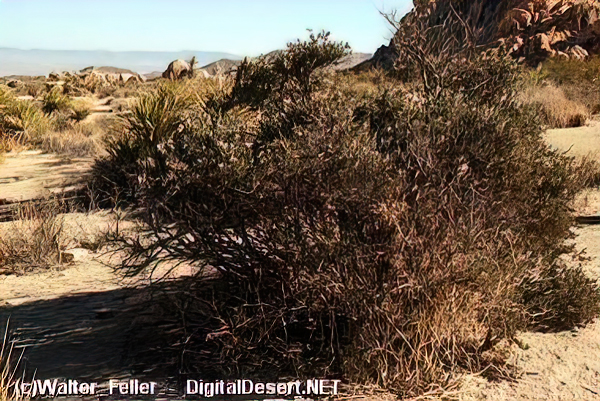
Jojoba bush
The jojoba bush is a hardy desert shrub that thrives in the dry climates of the Mojave and Sonoran deserts. Its small, thick leaves help conserve water by reducing evaporation, allowing the plant to survive long periods without rain.
Jojoba produces acorn-shaped seeds that contain a liquid wax commonly called jojoba oil. This substance protects the seed from drying out and has become valuable to people as an ingredient in cosmetics, soaps, and skin products.
In the desert community, jojoba provides food and shelter for wildlife. Rodents, birds, and insects make use of its seeds and branches, while its deep roots help stabilize desert soils.
Though it may appear modest among the larger yuccas and Joshua trees, the jojoba bush is an important part of the desert ecosystem and a good example of how plants adapt to life in a land of little rain.
Almost all desert animals nibble on jojoba bushes, enjoying their succulant, spineless leaves. Bighorn sheep and mule deer seem to relish its moist leaves as much as rabbits and rodents. Antelope ground squirrels sometimes hide the nut-like fruits for future eating. If they forget where they cached the nuts, a new plant may sprout. Because the jojoba fruit is about fifty percent oil, the species has gained commercial importance. This oil can be used in cooking, cosmetics, as a lubricant, and in waxes for cars.
| Intro:: Nature:: Geography & Maps:: Parks & Preserves:: Points of Interest:: Ghosts & Gold:: Communities:: Roads & Trails:: People & History:: Blog:: Weather:: |
|
Digital-Desert :
Mojave Desert
|
|
Country Life Realty Wrightwood, Ca. |
Mountain Hardware Wrightwood, Ca. |
Canyon Cartography |
G.A. Mercantile |
Grizzly Cafe Family Dining |
|
Abraxas Engineering privacy |
For educational use only; not a travel or safety guide. Copyright (c) Walter Feller, 1995-2026. All rights reserved. |