Western Pond Turtle
Actinemys marmorata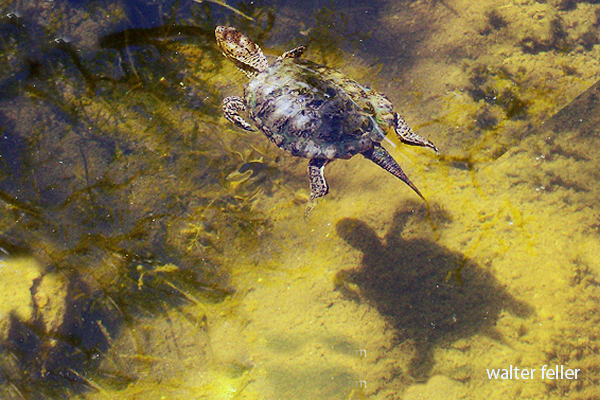
The western pond turtle is California's only native freshwater turtle and the state's most widespread turtle species. It occurs throughout most of California west of the Sierra Nevada and Cascade crest, but is absent from most desert regions except along the Mojave River and a few of its tributaries. It inhabits permanent or nearly permanent ponds, lakes, marshes, streams, irrigation canals, and pools, from sea level to about 4,690 feet (1,430 m).
An omnivore, the western pond turtle feeds on aquatic plants, insects, aquatic invertebrates, fish, frogs, and carrion. It relies on basking sites such as logs, rocks, floating vegetation, or mud banks to regulate its body temperature. When disturbed, it quickly slips into the water for protection. In colder parts of its range, it spends the winter hibernating in the mud at the bottom of ponds and streams.
Females leave the water during spring and early summer to lay eggs, sometimes traveling more than 300 feet (100 m) to find suitable nesting sites. Nests are dug in soils ranging from loose sand to hard-packed ground, provided they are deep enough and retain sufficient moisture. Clutches usually contain 3 to 11 eggs, which hatch after about 73 to 80 days under warm conditions. Young turtles are especially vulnerable to drying out and to predators such as fish, bullfrogs, garter snakes, wading birds, and mammals.
Western pond turtles are active mainly during the day, although some activity occurs at dawn, dusk, and night. Their home ranges are generally small, though individuals may move longer distances if water sources dry up. They are not territorial, but often compete aggressively for the best basking sites through displays and physical encounters.
In the Mojave Desert, western pond turtles are limited primarily to the permanent waters of the Mojave River system, where they represent an important native component of riparian ecosystems. Because they depend on reliable water, healthy streamside habitat, and suitable nesting areas, they are vulnerable to habitat loss, drought, introduced predators, and declining water quality.